
Author: Chad Michel

A Website Without Servers – Using Azure Functions: Part 2, Source Control
In Part 1 of this blog series, we set up some basic pieces for our engineer fashion application. In Part 2, we are going to add some source control to the process. Why source control? If step 1 of software development is having a plan, then step 2 is implementing some kind of source control…
Read more…
A Website Without Servers – Using Azure Functions: Part 1, Introduction
Why Azure Functions? Azure Functions provide a quick spot to drop some simple service code. Think of them as services without the hassle. No VS projects. No builds. Just go. Azure Functions are not a great technology for everything, but for services that contain simple logic they are probably okay. The biggest drawback to Azure…
Read more…

Legacy Application Wrangler
/* This post is part of a series about what we cover in our Software Design and Development Clinics, a 1-week series of classes where we dive into various aspects of software design and development principles. Legacy application migration is a core focus of this class. Learn more at http://dontpaniclabs.com/education/. */ We have never done any…
Read more…

Getting Started with Azure Cosmos DB, Part 4 – Partition Keys
We have gone through quite a bit of Azure Cosmos-related posts the last few weeks, but we have skipped over the concept of partition keys in almost of the queries we have covered. Ignoring the partition key is probably fine for these small data sets, but for real workloads we should probably think this through….
Read more…
Getting Started with Azure Cosmos DB, Part 3 – SQL Queries
In my first post, we performed some really basic CRUD queries against Azure Cosmos DB. In my second post, we went a little deeper and refined our queries. In this post, we are going to be using SQL to query Cosmos. Yep, SQL. First, we will rewrite our count method. Previously, we did something that…
Read more…
Getting Started with Azure Cosmos DB, Part 2 – More Advanced Queries
Our first post covering Azure Cosmos DB was pretty basic. If you noticed, our READ query was always returning all results. So even if we wanted to find a single item, we had to return all of the items. That plan has obvious problems. If we look at the code below, we can see that…
Read more…
Get Started with .NET Core 2.0
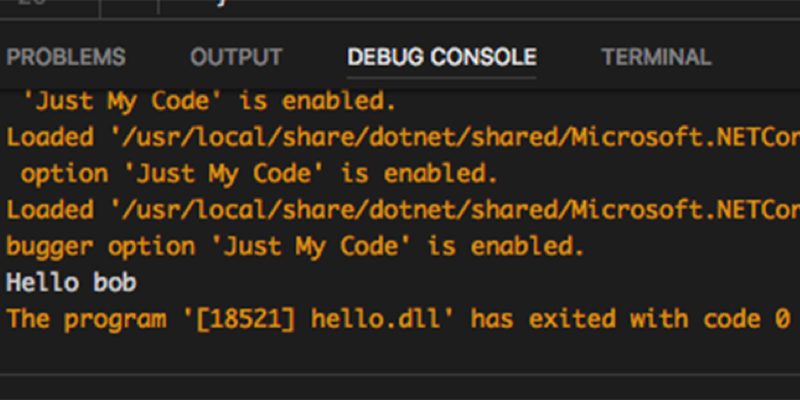
.NET Core 2.0 is finally out, which finally closes the loop and create a very usable .NET Core. This quick blog post is a quick start for .NET Core 2.0. 1. Install VS Code. 2. Install .NET Core 2.0. 3. Fire up terminal. 4. Create a new solution. 5. Create a console application. 6. Add…
Read more…
Getting Started with Azure Cosmos DB, Part 1 – CRUD
Cosmos – κόσμος – the world, universe – John Jeffrey Dodson Lexicon (public domain) Cosmos means the entire world, so I wonder if Azure Cosmos DB is Microsoft’s view of the entire world for data stores going forward. Sure, blob storage will have some particular advantages and SQL server will have some advantages too. But…
Read more…

Fun Through The Years
We have had a lot of fun since 2010 (when both Nebraska Global and Don’t Panic Labs were founded). This fun has always extended beyond just the Don’t Panic team. If you’ve ever been around Nebraska Global, you know we’re like one big family. We’re just a bit more spread out these days. We have…
Read more…

PHP Through the Eyes of a .NET Engineer
We are a software design and development shop. So when asked which tech stack we prefer we’ll always give some answer around our the preference for the Microsoft stack. We tend to use C# / .NET for most code writing, SQL Server for databases, and Azure for cloud storage. However, we recently undertook a PHP…
Read more…