
Our team has a storied history of developing complex software products that provide sustainable business agility while also solving difficult problems.
When we say “business agility,” we mean designing software that encapsulates change and sets your company or product up for scalable growth.
We expect to uncover new insights along the way, so we architect solutions that quickly adapt.
How we do it
Crucible of Learning
The experience gained from the numerous products we have undertaken through the years has shaped our approach to new products and startups. We have utilized this knowledge to refine our problem-solving methods and discover the most effective strategies.
Always have a plan
Contrary to some popular beliefs, you can be innovative when you have a plan. The right kind of plan increases agility, enables you to react appropriately to change, and maximizes your efforts within the constraints of your project.
Design for Change
Requirements will consistently change in form and in priority, so we use iterative/Agile approaches for development and releases. It is also why we design our systems to allow for change to occur.
Layered approach to quality
There is no one software practice that will find every bug. That is why we employ a layered approach to quality that includes automated unit/integration testing, code reviews, pair programming, etc.
Individual Accountability
Hierarchy and bureaucracy are rarely beneficial in creative endeavors, which is why we promote accountability and decision-making at both the individual and team levels.
Proven Patterns & Designs
Few problems require novel solutions. That is why we strive to adopt proven patterns and designs whenever possible. We develop from first principles when absolutely necessary.
Diverse Expertise
Technologies and Processes
Processes
- Build upon SOLID design principles
- Leverage service-oriented design
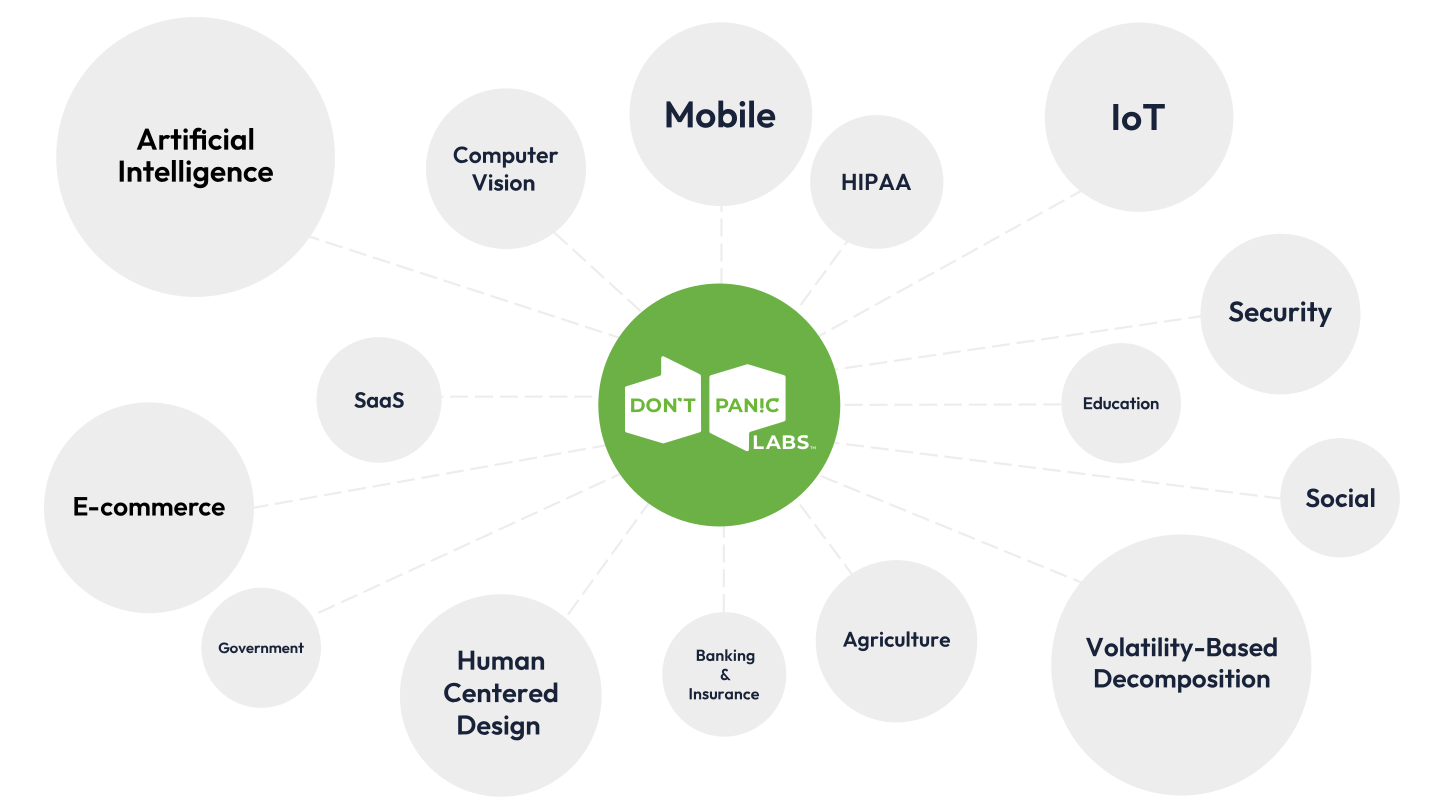
- Volatility-based decomposition
- Test-driven development to minimize bugs and maximize throughput
- Rapid prototyping of UI/UX
- Software Engineering Body of Knowledge (SWEBOK)
- Funability
- Project Design
- Detail Design
Web
- Angular
- React
- Vue
- Bootstrap
Mobile
- Ionic
- Swift
- Kotlin
Desktop
- Electron
- WPF
- WinForms
Platforms
- Microsoft .NET / C#
- ASP.NET
- TypeScript
- Node
- Microsoft SQL Server
- PostgreSQL
- MongoDB
Artificial Intelligence
- Azure AI Search
- Azure AI Services
- ChatGPT
- Computer Vision
- Llama
- Machine Learning
Cloud and Hosting
- Microsoft Azure
- Amazon Web Services (AWS)
- On-Premise
14 Years of Better Software
We were purpose-built to accelerate and reduce the risk of software product startups. Our belief that good software design is essential for product stability and extensibility has been proven time and again.
A lot has changed since we were founded in 2010. However, one thing that has NOT changed is the benefit of having the right processes in place.
While “moving fast and breaking things” has been a popular approach in our industry, it accumulates large amounts of technical debt, slows future development, and leads to expensive and time-consuming rework. Having a consistent design identity ensures your software product will grow and adapt alongside your startup or organization.
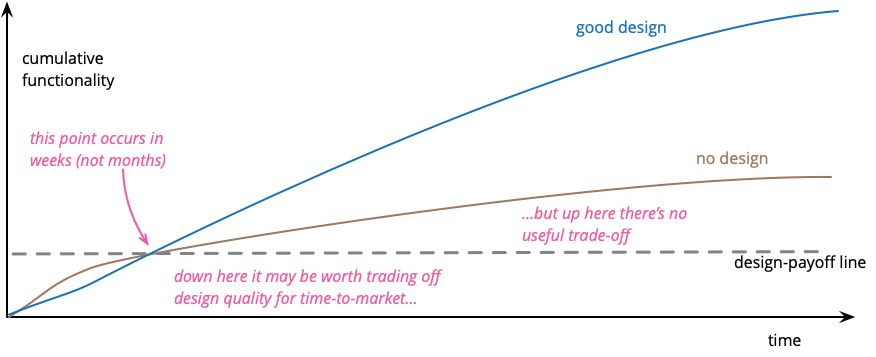
Martin Fowler’s “Design Stamina Hypothesis” provides a compelling argument for the benefits of prioritizing good design. He introduces the concept of a “design payoff line,” where the advantages of good design become apparent as a project progresses.
In other words, projects that prioritize design not only maintain consistent productivity but eventually outperform those that do not.
HobbyTown – Improved Retail Data Management System
When HobbyTown reached a point where their franchise management and point-of-sale (POS) systems no longer met the needs of their stores, they wanted a team that could help build a modern system leveraging the latest technologies.
By moving HobbyTown developers on-site to work alongside the Don’t Panic Labs Microsoft Azure experts, the joint team created a system that provides intelligent pricing, powerful inventory management, and better data sharing among stores.

Metropolitan Utilities District – Growing Internal Talent
Finding qualified software development talent is difficult, and Metropolitan Utilities District has experienced that challenge firsthand. When they decided to participate in the Don’t Panic Labs Pathways Program and find existing employees who wanted to grow into software developers, they were flooded with candidates eager to learn more and grow their contributions to the organization.
We spoke with Pathways Program graduate Tiffany Jackson and the Metropolitan Utilities District leadership who made this life-changing opportunity possible.

Layer – Management Platform for Architects and Building Managers
Layer is a project information management platform. By streamlining how data is captured, organized, and shared, it accelerates the design, construction, and operations of buildings.
The idea for Layer came from a team at BVH Architecture while they were conducting a conditions assessment on the Nebraska State Capitol. What started as a project to save their team time and effort turned into a platform that can now be leveraged by anyone involved at any stage of a building’s lifecycle.
Watch Layer CEO Zach Soflin and Don’t Panic Labs Chief Product Officer Brian Zimmer talk about this powerful collaboration.

As a successful construction company owner, Bo Jones knew employers’ struggles in finding the best job candidates. At the same time, he saw a gap in how the next generation workforce can demonstrate their work experience and follow their passions toward a rewarding career.
In collaboration with the Don’t Panic Labs team, Bo tested his hypotheses and created a social media platform that benefits employers looking for talent and students trying to figure out their career paths.
Learn more at CareerPathway.com.

Vosaic – Helping Teams Capture, Annotate, and Analyze Video
While building a mobile version of their video analysis software, Vosaic needed an experienced team to help cross the finish line.
Vosaic – formerly known as Studiocode – needed to create a mobile version of their desktop video analysis software to continue meeting customers’ needs.
Working closely with the team at Don’t Panic Labs, Vosaic was able to meet their aggressive timeline and continue helping teams around the world use video to capture, annotate, analyze, and collaborate.

Fourstarzz – Helping Brands and Agencies Master Influencer Marketing
Fourstarzz uses technology to help brands and agencies master influencer marketing. Their platform makes the process of creating marketing campaigns more efficient and impactful.
When Fourstarzz founders Dennis Doerfl and Daniel Troesch needed a partner to help them bring their idea to life, they approached Don’t Panic Labs to architect a social media marketing tool that is now used by some of the biggest brand names in the world.

LocalAnyDay – A Mobile Experience for Finding Food & Drink Deals
CEO Mailani Veney of LocalAnyDay (formerly DealAnyDay) needed to take her mobile-responsive website to a mobile app.
They are a marketing technology company and did not have all the skills necessary to make this difficult jump on their own. The vision was there; they just needed a partner to make it a reality.
That is where Don’t Panic Labs and their Xamarin mobile development experience helped take LocalAnyDay to the next level.

ClassBundl – Simplifying School Shopping
ClassBundl’s innovative approach to simplifying the school shopping experience for parents provides an added bonus: the ability to earn rewards that turn into real dollars for schools.
Because of their rapid growth, ClassBundl’s online platform needed to adapt. By working alongside the engineers at Don’t Panic Labs, the ClassBundl team was able to leverage a proven framework for efficient development. This added level of quality ensures that parents have the best possible experience.