
Author: Chad Michel
Legacy Migration Playbook – Segment the New from the Old
So far, we have covered five “plays” we can run during a legacy migration. These plays can be used independently, or they can be used together; it all depends upon the situation. Each solution/situation is somewhat unique. Each legacy project requires a different approach. Sometimes the right answer is to leave the existing solution in…
Read more…
Legacy Migration Playbook – Determine a Migration Strategy / Strangle
Martin Fowler is held in high regard around our office. Two of his creations are referenced a lot: the idea of design stamina hypothesis and his strangler pattern for legacy migration. When we engage in work on a legacy application, the strangler pattern often comes up. Ironically, we will refer to it as the strangler…
Read more…

Legacy Migration Playbook – Add Some Unit Tests
Rarely do legacy systems have any sort of automated testing in place. Usually, all testing has been completed manually on the project. And when this is the case there often isn’t an obvious spot in the solution to add a unit test. Adding tests to an existing project can be extremely painful. There is a…
Read more…

2019: A Year in Review
2019 was another fun and productive year here at Don’t Panic Labs. As I look back, I’m a bit surprised by how many projects we completed and the number of clients we were able to help by creating value for their businesses. Here are what I see as highlights of 2019. (More) to the Cloud…
Read more…

Legacy Migration Playbook – Mini Spike Work
Working in a legacy system runs the gamut of difficulty: it can be easy, sometimes challenging, and other times almost impossible. It is hard to know which of these experiences you will face until you get in there and do a little work. If you already have a good understanding of the legacy system you’re…
Read more…
Legacy Migration Playbook – Design the Ideal End State
“If you don’t know where you are going you might end up somewhere else.” – Yogi Berra One of the critical challenges with legacy systems is not having a clear goal in mind. Knowing where you want to end up is essential for a few reasons. First, it provides you and your team with a…
Read more…

Legacy Migration Playbook – System Review / Code Review
As you approach a legacy system, there are many things (plays) you might do to get a handle on it. We covered this list on a general level in my first post in this series. In this post, we are going to cover maybe the most important play: the system review. What Process Is the…
Read more…
Legacy Migration Playbook – Introduction
There are a lot of working solutions out there. And there’s a lot of code behind those solutions. Along with those solutions are often many reasons why they need to be upgraded (and not just enhanced with new features). Sometimes the weight of technical debt becomes too large. Sometimes technology changes out from under a…
Read more…

Book Review: Range
Like many readers, I have enjoyed many of Malcolm Gladwell’s books. His book Outliers has been very influential on our culture’s thoughts. The 10,000-hour rule is known by most of us at this point; it has almost become a rule that people believe to be true. But in the book Range: Why Generalists Triumph in…
Read more…
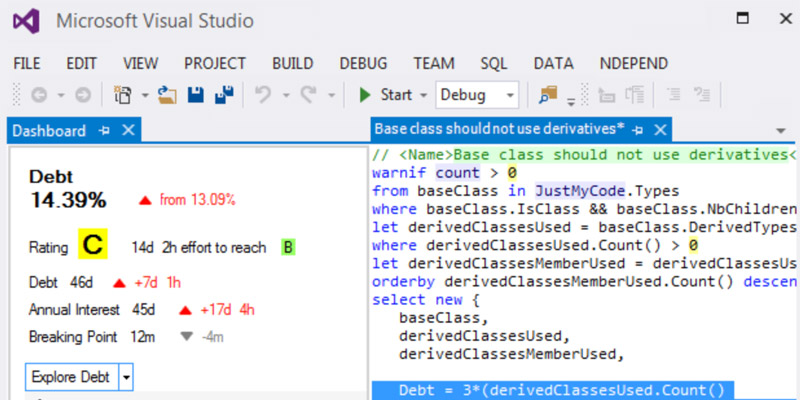
NDepend: Powerful Static Code Analysis
How do you effectively evaluate a software solution? This is a question commonly heard in software development. It reminds me of a question posed in Caddyshack, “How do you compare yourself to other golfers?”, to which Chevy Chase responds with, “By height.” Analysis of a system usually requires a lot of leg work, poring through…
Read more…